Melasma and more even-looking tone
The 675 nm wavelength interacts with melanin and has been studied for selected melasma in Thai skin. Brightening here means reducing excess pigment and visual unevenness, not changing natural skin colour.
For melasma and tone, fine lines, acne scars and pores
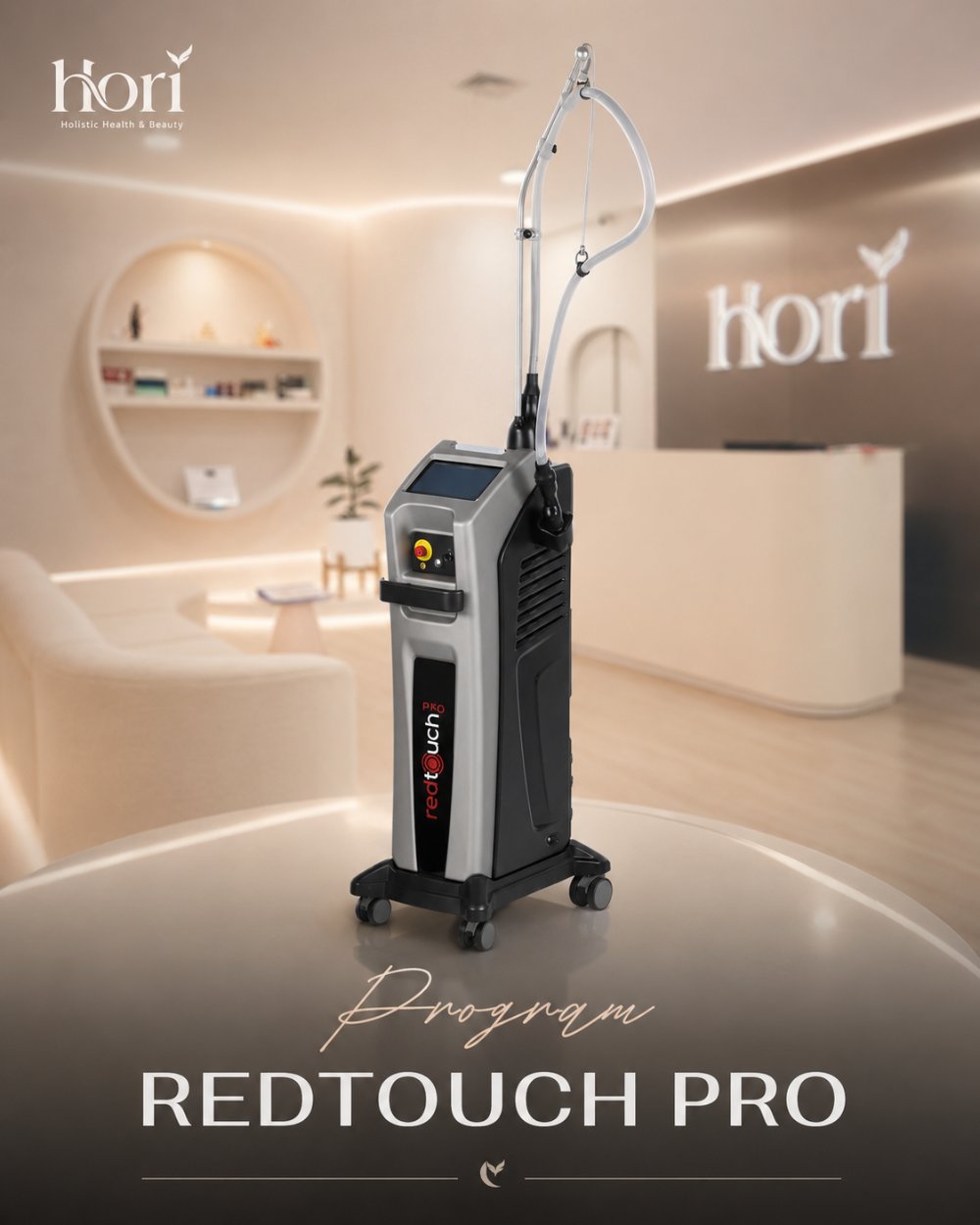
A non-ablative 675 nm red-light laser from DEKA, Italy. Hori Clinic organises assessment around three goals: melasma and more even-looking tone; fine lines on the face and selected neck or dorsal-hand concerns; and selected atrophic acne scars and enlarged pores. Evidence strength and settings differ by concern and body area.
Quick answer
RedTouch Pro is a non-ablative 675 nm laser that may be selected for (1) melasma and excess pigment, (2) fine lines and photoaged skin, and (3) selected atrophic acne scars, uneven texture or enlarged pores. Recovery varies with settings and individual response. Evidence applies to specific studied groups, does not guarantee an individual result, and remains limited for neck lines.
Jump to the answer you need. The complete medical details and evidence remain below.
From ฿9,999 / session
This is the listed starting price. Ask the clinic to confirm the current quote and what it includes before booking.
The starting price alone does not identify the same treatment plan for everyone.
Hori Clinic is at Times Square Building, 4th floor, Rooms 411–412, Sukhumvit Road, Bangkok, near BTS Asok and MRT Sukhumvit.
Before travelling, confirm your appointment and current total price with the clinic. Ask how much time to allow for the consultation, treatment and any follow-up visits.
DEKA Thailand lists Hori Clinic with RedTouch Pro at Times Square Building.
A directory listing identifies the clinic and device; it does not guarantee an individual treatment result.
The 675 nm red-light wavelength interacts with melanin and dermal collagen. Controlled energy delivery is designed to support collagen remodelling, while published clinical studies have also evaluated this wavelength for selected melasma. The appropriate indication and settings depend on medical assessment.
Because the epidermis is protected by integrated contact cooling, the surface is intended to remain non-ablated, although crusting or other reactions can still occur — it targets texture without ablating the surface, while response and recovery still vary. Developed by DEKA, Italy, suitability for sensitive or easily irritated skin still requires assessment.
Collagen: 675 nm has high affinity for dermal collagen. Fractional microthermal delivery is intended to initiate collagen remodelling, which is why it has been studied for selected atrophic acne scars, uneven texture, the appearance of enlarged pores and fine lines. Deep or tethered scars may still need Subcision or combination treatment.
Melanin: 675 nm lies within melanin's absorption range and has been studied for melasma and selected excess-pigment concerns. In a single-arm Siriraj study of 28 Thai women with Fitzpatrick III–V skin, three monthly sessions were associated with an average mMASI reduction of about 41% at 3 months and 34% at 6 months; no post-inflammatory hyperpigmentation was observed in that study. The sample was small, there was no comparator and melasma can recur, so this is not an individual guarantee. Sun spots and dark marks must be diagnosed before choosing a device.
Redness / vascular signal: 675 nm is not primarily a vascular laser, and several publications describe little interaction with haemoglobin. A small study in darker-skin melasma found a reduction in an imaging-derived haemoglobin value after treatment, but the mechanism may be indirect through collagen around vessel walls. Direct evidence for treating facial redness remains limited.
Evidence summary reviewed from prospective clinical studies, histology and laboratory research. Study designs and endpoints differ, so these mechanisms should not be read as a promise of a specific result.
The 675 nm wavelength interacts with melanin and has been studied for selected melasma in Thai skin. Brightening here means reducing excess pigment and visual unevenness, not changing natural skin colour.
Collagen remodelling may support fine-line and photoaging plans. Facial evidence is more direct; dorsal-hand data are small, while direct evidence for neck lines remains limited, so each area needs separate assessment.
Fractional delivery may support collagen remodelling for selected atrophic scars, uneven texture and enlarged pores. Tethered or deep scars may require Subcision or another treatment in combination.
A prospective pre–post study from Siriraj Hospital enrolled 28 Thai women with Fitzpatrick skin types III–V. Participants received three monthly sessions of the 675 nm RedTouch laser as monotherapy. Mean modified Melasma Area and Severity Index (mMASI) decreased by about 41% at the 3-month follow-up and remained about 34% below baseline at 6 months.
The 675 nm wavelength interacts with both melanin and dermal collagen. In this study, reported reactions were mild and temporary, but the result cannot be treated as a guarantee: there was no comparison group, the sample was small and entirely female, and follow-up lasted only 6 months with a minor rebound at the final visit.
Source: Thongjaroensirikul P, et al. Dermatology and Therapy. 2026;16(1):617–627. PMID 41372602. Individual outcomes can differ according to melasma type, triggers, treatment settings and aftercare.
Facial fine lines have been evaluated in small prospective studies of the 675 nm laser, including periocular and perioral areas. Change is gradual because the goal is collagen remodelling rather than filling or relaxing a moving wrinkle immediately.
Dorsal hands have a small 21-person study focused on photodamage, pigmentation and texture. Hand skin is thin and heals differently, so settings should not simply be copied from the face. Neck lines may reflect skin quality, laxity, muscle movement or horizontal creases; direct 675 nm evidence for neck lines remains limited and another treatment may fit the main cause better.
Fractional 675 nm delivery may support collagen remodelling for selected atrophic acne scars, uneven texture and enlarged pores. A prospective Asian study in Fitzpatrick III–IV skin reported gradual improvement after three monthly sessions, but the sample was small and results varied.
RedTouch does not release fibrous bands under tethered rolling scars and cannot rebuild every deep ice-pick scar. These patterns may need Subcision, focal treatment or a combination plan. The realistic goal is softer scar edges and more even-looking texture, not poreless skin.
After cleansing, the doctor scans the treatment area with the RedTouch Pro handpiece — most people feel gentle warmth with the integrated cooling keeping the surface comfortable, so numbing cream is usually unnecessary. A full-face session takes about 20–30 minutes.
There is generally no planned downtime. If the skin surface is intact, makeup is usually possible immediately after the clinician's check. Temporary redness, warmth, swelling, crusting or irritation can still occur depending on the individual response and settings. Moisturise, avoid strong actives for a couple of days, and use SPF 50 daily.
Changes in excess pigment and visual tone may be noticed over a treatment series, while fine lines, scar edges, texture and the appearance of pores generally change more gradually as collagen remodels. Timing differs by diagnosis and body area. Melasma can recur, deep scars may need combination treatment, and neck or dorsal-hand plans should not be assumed to respond like the face.
Everyone responds differently. Before treatment, your doctor will examine the area and talk through a plan that makes sense for you.
From Hori Clinic
Watch this video on Hori Clinic's official YouTube channel →
One client describes the session as comfortable and says she was able to continue her day. The doctor discusses small lines, dark and red marks, and enlarged pores. This is one person's experience; sensation, recovery and results vary.
The listed starting price at Hori Clinic is ฿9,999 per session. The final price depends on the treatment area, plan and current promotion; please confirm the current price before booking.
Sensation varies. Many people describe warmth or cooling from the handpiece; whether numbing is appropriate depends on the area and individual assessment.
A plan may include multiple sessions, but the number, interval and timing of visible change vary by scar type, settings and individual response.
In a prospective single-arm Siriraj study of 28 Thai women with Fitzpatrick skin types III–V, three monthly 675 nm laser sessions were associated with an average mMASI reduction of about 41% at 3 months and 34% at 6 months. No post-inflammatory hyperpigmentation was observed in that study. It had no comparator and involved a small all-female sample, so it does not guarantee the same outcome for every patient; melasma can also recur. Brightening means reducing excess pigment and visual unevenness, not changing natural skin colour.
Small studies have evaluated facial wrinkles and photodamaged dorsal hands. Direct evidence for neck lines remains limited. Because skin thickness, healing and the causes of lines differ by area, a doctor should assess each location and may recommend another or combined treatment.
Fractional 675 nm delivery may support collagen remodelling for selected shallow atrophic scars, uneven texture and enlarged pores. It does not release tethered scars, so deep or fibrotic scars may need Subcision or another treatment in combination.
Not as a primary vascular target. Several 675 nm publications describe little interaction with haemoglobin. A small study in darker-skin melasma found a lower imaging-derived haemoglobin value after treatment, but the proposed mechanism may be indirect through collagen around vessel walls. Direct evidence for facial redness remains limited, so a doctor should first distinguish redness, visible vessels and post-acne erythema.
The devices use different wavelengths and pulse characteristics. Picosecond lasers use ultrashort pulses for selected pigment and texture concerns; the 675 nm RedTouch wavelength interacts with melanin and dermal collagen and has been studied for selected melasma and skin-quality concerns. A doctor should choose the device or combination from the melasma pattern, depth, skin response and risk.
There is generally no planned downtime. If the skin surface is intact, makeup is usually possible immediately after the clinician's check. Temporary redness or irritation can still occur, so follow the aftercare advice and use daily SPF.
Medical decision support
Evidence strength differs by indication and body area. Facial, melasma, dorsal-hand and acne-scar studies are mostly small and do not establish equivalent outcomes for the neck or guarantee an individual result.
Verify Hori Clinic's RedTouch Pro listing with DEKA Thailand
This page provides general information and is not a diagnosis. A physician must review your medical history, skin or tissue condition, previous procedures and goals before recommending treatment.
Your treatment is performed by a doctor
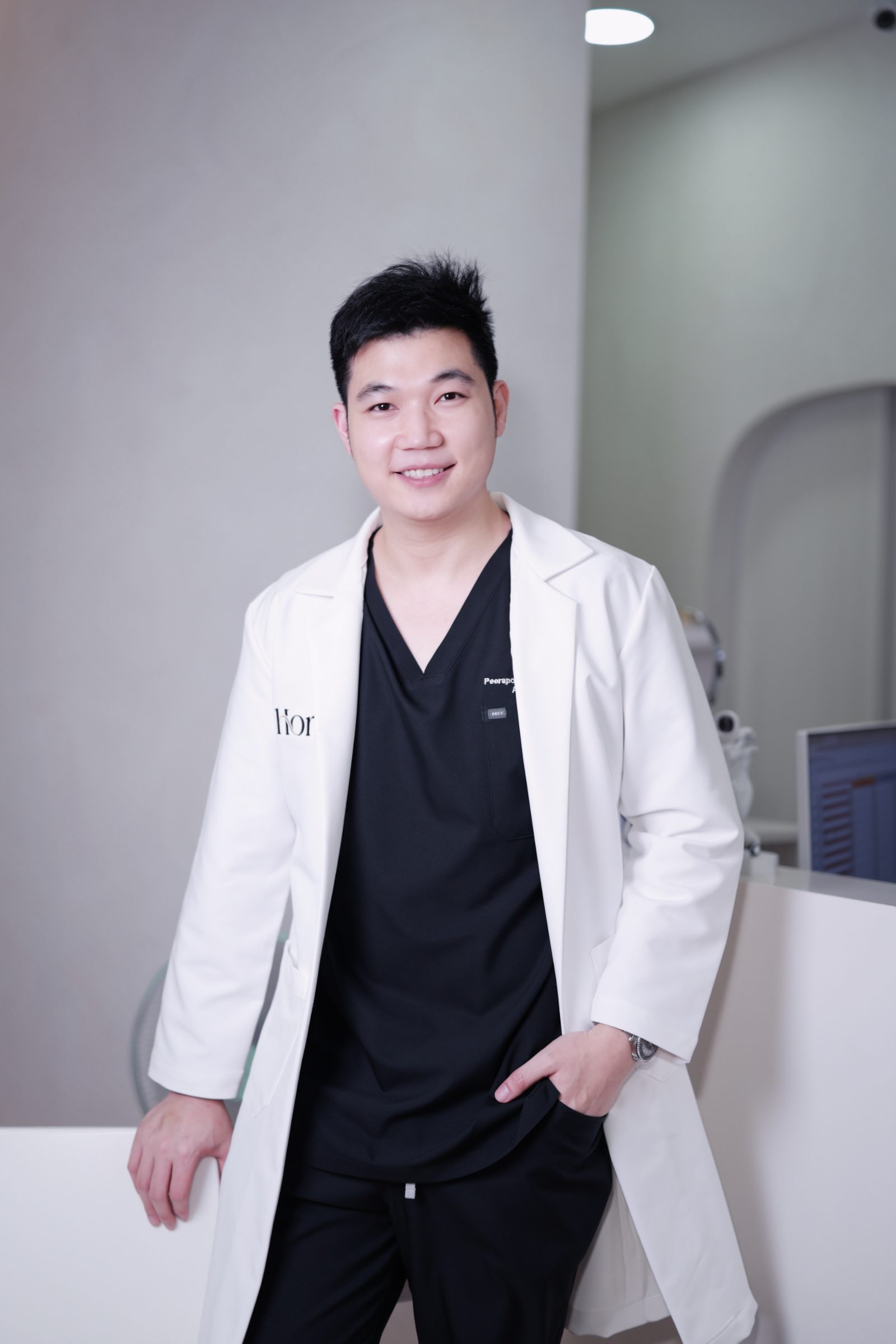
Dr. Peerapol Riawraengsattha (Dr. Lhong)
Anesthesiology · Aesthetic Medicine · Thai medical licence 58253
Tell us what you are concerned about. Our team can help you prepare for a conversation with the doctor.
Visit
246 Times Square Building, 4F, Room 411–412
Sukhumvit Rd, Khlong Toei, Bangkok 10110
Hours
Open every day 11:00–20:00
 Holistic Health & Beauty
© 2026 Hori Clinic · Bangkok