Ultraformer MPT vs OligioX: HIFU, RF and thread lifting
Three popular ways to lift without surgery — how each works, who it suits, and when to combine them.
Quick answer
HIFU or RF: which matches the concern?
HIFU and monopolar RF work at different tissue depths. Focused ultrasound is generally considered when deeper laxity or jawline support is the main concern; RF is considered for dermal firmness and selected texture concerns. Neither is automatically better, and some people may not need both. A physician should assess tissue depth, medical history, expected change and acceptable recovery before recommending a sequence.
- Suitable for
- HIFU: selected deeper laxity; RF: selected firmness or dermal texture concerns.
- What to expect
- Change is gradual and should be judged at follow-up, not only immediately after treatment.
- Risks
- Redness, swelling, tenderness, burns or unintended tissue effects are possible and setting-dependent.
- Downtime
- Often limited, but redness, swelling or tenderness can affect some people for longer.
- When to see a doctor
- Get assessed before treatment; seek review for severe pain, blistering, weakness or symptoms that worsen.
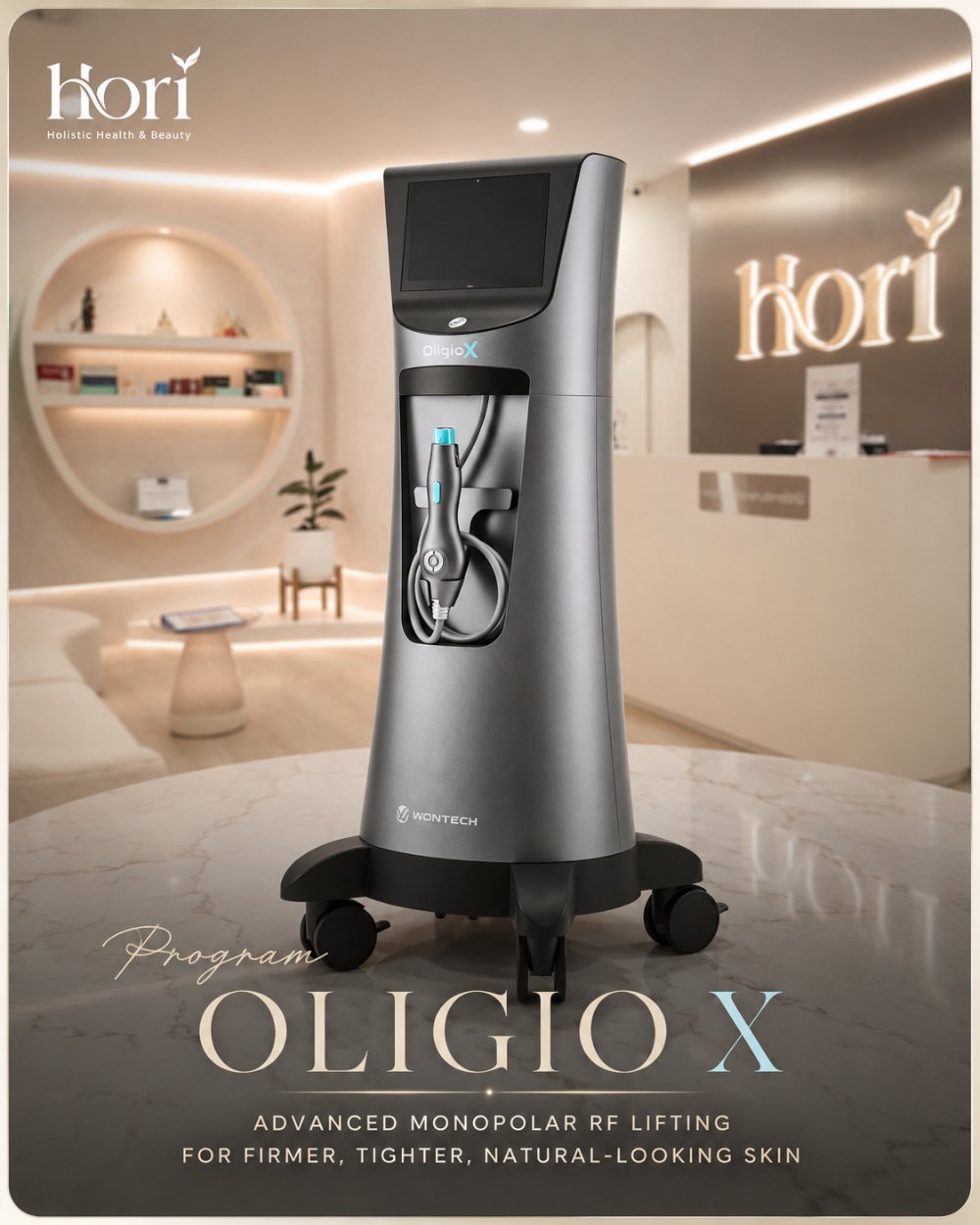
"Which lifting treatment is best?" is less useful than asking: which tissue layer appears to be driving the concern? HIFU, monopolar RF and threads differ in mechanism, target depth, sensation, downtime and how treatment quantity is counted. One method may be enough; a combination should be considered only when an examination identifies more than one relevant layer.
Lifting is about depth, not just energy
A concern described simply as "sagging" may relate to skin quality, dermal laxity, fat distribution, volume loss or deeper support. HIFU and monopolar RF deliver energy differently, so a physician first needs to identify the likely tissue layer, what the device can realistically address and what it cannot. This is why treatment selection matters more than comparing machine names or headline counts alone.
HIFU — a deep ultrasound lift
Focused ultrasound creates small thermal points at tissue depths selected by the physician. At Hori, Ultraformer MPT (HIFU) may be considered when selected deeper laxity or jawline support is the main concern. The plan is not determined by line count alone: treatment area, tissue thickness, cartridge and depth selection, energy and prior procedures all affect the assessment.
RF (OligioX) — dermal tightening & skin quality
Monopolar radiofrequency delivers controlled, broader heating through selected tissue rather than creating focused thermal points. OligioX (monopolar RF) may be considered for selected dermal firmness, mild-to-moderate laxity or texture concerns. RF shot count is not equivalent to HIFU line count; the appropriate area, energy and complete plan still depend on examination.
Thread lift — an immediate mechanical lift
Absorbable threads are placed to physically reposition tissue, giving an immediate lift plus gradual collagen stimulation along the thread path. Results are visible at once but involve more downtime and a different risk profile. Threads are best assessed in person; for collagen-based volume and lift without threads, biostimulators such as Sculptra or Radiesse are an excellent route, and are part of Hori's lifting menu.
So which should you choose?
Use the following as a discussion guide, not a self-diagnosis:
- Selected deeper laxity or jawline support: discuss whether HIFU and the Ultraformer MPT treatment details match the examined layer.
- Dermal firmness or selected texture concerns: discuss whether monopolar RF and the OligioX treatment details fit the goal.
- Volume loss, fat distribution or prior procedures: another option in the lifting programme, a staged plan or no procedure may be more appropriate.
- More than one relevant layer: a physician may consider sequencing or combining methods, but not everyone needs both HIFU and RF.
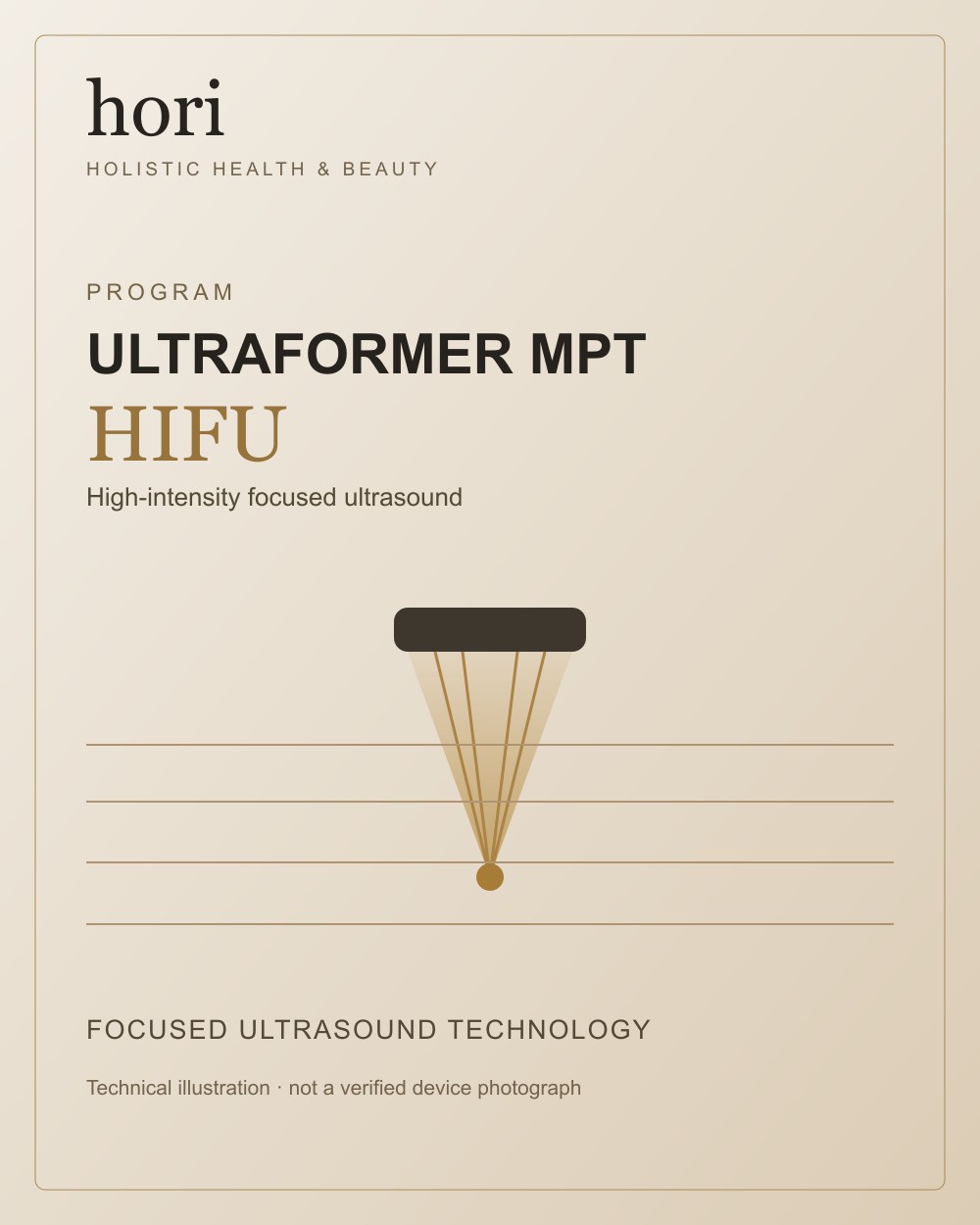
Physician decision lens
“Sagging” can come from more than one tissue layer
The machine should follow the examination. A physician separates skin laxity from fat distribution, volume loss and deeper support before deciding whether HIFU, monopolar RF, another method, a staged combination or no procedure is the better direction.
- Which tissue layer appears to drive the concern, and what can this device not correct?
- Is facial fat or volume already limited, and could aggressive tightening work against the desired shape?
- What prior filler, threads, surgery or energy treatment affects the plan, treatment area or timing?
- What is the measurable goal, acceptable recovery and follow-up plan before adding a second device?
Ultraformer MPT vs OligioX: compare the factors
| Comparison topic | HIFU Ultraformer MPT | RF OligioX |
|---|---|---|
| Mechanism | Focused ultrasound creates thermal points at tissue depths selected by the doctor | Monopolar RF delivers controlled, broader heating through selected tissue |
| Main concern assessed | Selected deeper laxity or jawline support | Mild-to-moderate laxity, firmness and selected dermal texture concerns |
| Assessment and evidence horizon | Often assessed around 3 months. Published reviews report improvement through 6–12 months; longer-term data are limited. | Often assessed at 1–3 months. Studies report improvement through 6 months; duration beyond this is not established for every device or setting. |
| Sensation | Brief deep warmth, tingling or tightness; intensity varies by area and energy | Warmth or short bursts of heat; intensity varies by area, energy and individual sensitivity |
| Downtime | Redness, swelling, tenderness, tingling or altered sensation can occur | Temporary warmth, redness, swelling or tenderness can occur |
| Starting price at Hori | 400 shots · ฿15,000 | 100 shots · ฿4,500 |
Evidence horizons describe published follow-up, not a guaranteed duration for one person. Starting prices reflect the current Hori service pages and may change. HIFU lines and RF shots are not equivalent units, so compare the assessed goal and complete plan—not the number alone—and confirm the current price before payment.
The short version
- HIFU uses focused ultrasound at selected depths; RF applies controlled heating across selected tissue.
- Either may be used alone or in a combined plan after assessment; not everyone needs both.
- Compare the goal, evidence horizon, sensation, downtime and complete price plan—not price alone.
Compare treatment quotes in Bangkok
Hori Clinic lists Ultraformer MPT 400 shots at THB 15,000 and OligioX 100 shots at THB 4,500. These are separate starting options, not an equivalent dose or a recommendation to combine both.
- Confirm the exact model: Ultraformer MPT and OligioX should be named on the quotation. Oligio and OligioX are different models.
- Compare the same treatment area, shot count within the same technology, planned depths or tip, and total cost.
- Ask who assesses and performs the treatment, what follow-up is planned, and whether doctor, tip or other fees are additional.
Frequently asked questions
Can I do HIFU and RF together?+
Sometimes. A doctor should first decide whether a combined plan adds value for the assessed tissue and goal, then set the sequence and spacing.
Which has the least downtime?+
Both can cause temporary redness, swelling or tenderness; HIFU can also cause tingling or altered sensation. Actual downtime depends on the area, settings and individual response.
Is RF or HIFU better for sagging?+
There is no universal winner. The choice depends on the depth and pattern of laxity, skin quality, medical history and the change that is realistic for that person.
Does Hori offer thread lifts?+
Hori's lifting menu centres on energy-based devices (HIFU, RF) and biostimulators (Sculptra, Radiesse). If threads are the best option for you, we'll discuss it honestly at consultation.
How do I know which one I need?+
A consultation assesses laxity, skin quality, tissue volume and your goals so the doctor can explain whether one approach, a combination or no treatment is appropriate.