OligioX Explained: Monopolar RF Tightening Without Surgery
How radiofrequency firms skin from within, what a session feels like, and when results peak.
Quick answer
OligioX: what to know first
OligioX uses monopolar radiofrequency to heat selected dermal and subdermal tissue and may suit mild-to-moderate laxity or reduced firmness. It is not interchangeable with focused ultrasound; anatomy, comfort, settings and the main concern should guide the choice.
- Suitable for
- Mild-to-moderate laxity or reduced skin firmness after medical assessment
- Discuss first
- Discuss pregnancy, infection, pacemakers, implanted electronics, metal and previous procedures
- Discomfort
- Controlled warmth or brief hot spots; comfort depends on area, settings and individual sensitivity
- Downtime
- Temporary redness, warmth, swelling or tenderness may occur
- When change may be noticed
- Firmness changes are gradual and vary with tissue and treatment settings
- Alternatives
- Focused ultrasound, another tightening plan or surgical assessment may better match another goal
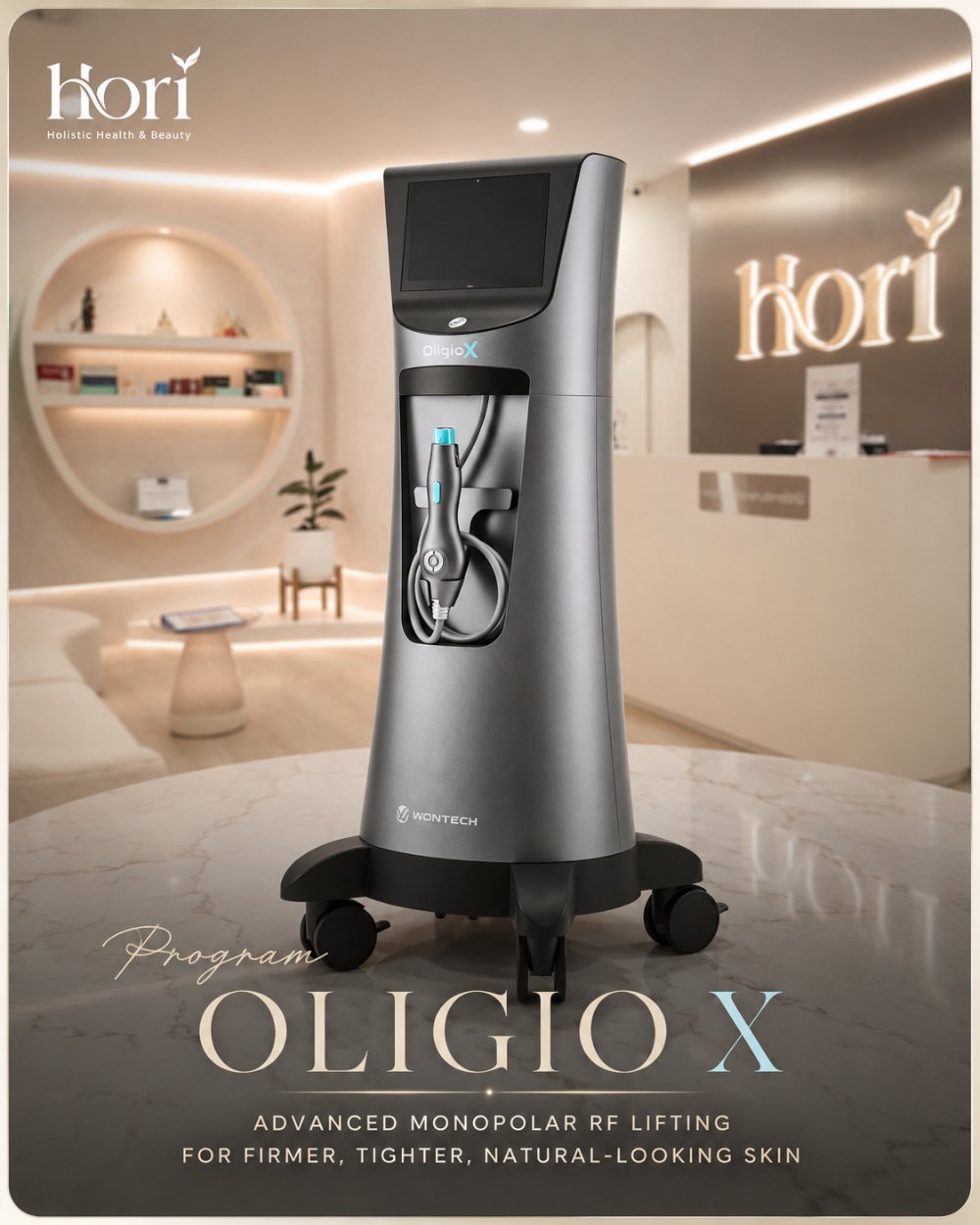
OligioX is a monopolar radiofrequency (RF) device — the same technology family famous for "no-downtime tightening". It heats the deeper dermis to a precise temperature where collagen fibres contract immediately and rebuild over the following months. Firmer cheeks, smoother jawline, no needles.
How OligioX works
Monopolar RF sends controlled radio waves through the skin, generating volumetric heat around 55–65°C in the dermis while the surface is protected by cooling. Two things happen: existing collagen contracts (an immediate, subtle firming) and fibroblasts are switched on to build new collagen over 2–3 months (the real result).
The X generation adds refined tips and energy delivery for more comfort at equal effectiveness — heat where it works, not where it hurts.
Oligio (RF) vs HIFU — quick orientation
RF heats the dermis in a broad, volumetric way — best for skin-level firmness, texture and fine laxity. HIFU focuses ultrasound deeper at the SMAS layer — best for lifting heavier sagging. Many faces benefit from both in one year; our full comparison article covers this in depth.
What a session feels like
After cleansing and marking, the tip is placed shot by shot across the face — typically 300–600 shots depending on the plan. Each pulse feels warm with a brief deep-heat moment; cooling makes it very tolerable. A full-face session takes about 30–45 minutes, and you can return to normal life immediately — mild pinkness fades within hours.
When results show and how long they last
A slight tightening is often visible right away, but the honest curve is: gradual improvement from week 4, peaking around month 2–3 as new collagen matures. Results typically hold up to a year; most people repeat once a year or pair it with HIFU on alternating cycles.
The short version
- OligioX = monopolar RF: volumetric dermal heat → contract + rebuild collagen.
- No needles, no downtime; a session is ~30–45 minutes.
- Results peak at month 2–3 and typically last up to a year.
Frequently asked questions
Does Oligio hurt?+
Most describe warmth with brief deep-heat pulses — uncomfortable moments rather than pain. Cooling and adjustable energy keep it very manageable.
How many shots do I need?+
Common full-face plans are 300–600 shots depending on laxity and areas. The doctor counts what your face actually needs at consultation.
Is one session enough?+
For mild laxity, one good session a year is a common rhythm. More laxity may pair RF with HIFU or repeat sooner — assessment decides.
Who should avoid RF?+
People with pacemakers/implanted electronics, metal implants in the area, pregnancy, or active skin infection. The consult screens for these.
Oligio or Ultraformer first?+
Skin-level laxity and texture → Oligio; deeper sag and jowls → HIFU. Combined plans commonly run them 4+ weeks apart.